Tracking Your Carbon Impact: How Small Actions Add Up
When we choose to cycle instead of drive, or buy second-hand rather than new, what’s the actual environmental impact? We hear about carbon footprints constantly, but translating daily choices into measurable outcomes feels abstract.
That curiosity led us to build a carbon sequestration tracker that quantifies the environmental benefit of sustainable actions. It’s now part of The Kitchen Sink, a utility app we recently launched.
Understanding Carbon Sequestration
Carbon sequestration refers to capturing and storing atmospheric carbon dioxide. Whilst reducing emissions matters enormously—cycling instead of driving prevents CO2 from entering the atmosphere—true sequestration draws carbon out of the air and stores it, primarily in soil and vegetation.
This distinction matters. As highlighted in the documentary “Kiss the Ground” and the comprehensive research project “Drawdown,” regenerating soil through practices like composting, planting trees, and supporting regenerative agriculture actively removes carbon from the atmosphere whilst restoring ecosystems.
Our tracker captures both: actions that prevent emissions and actions that sequester carbon into the earth.
How the Tracker Works
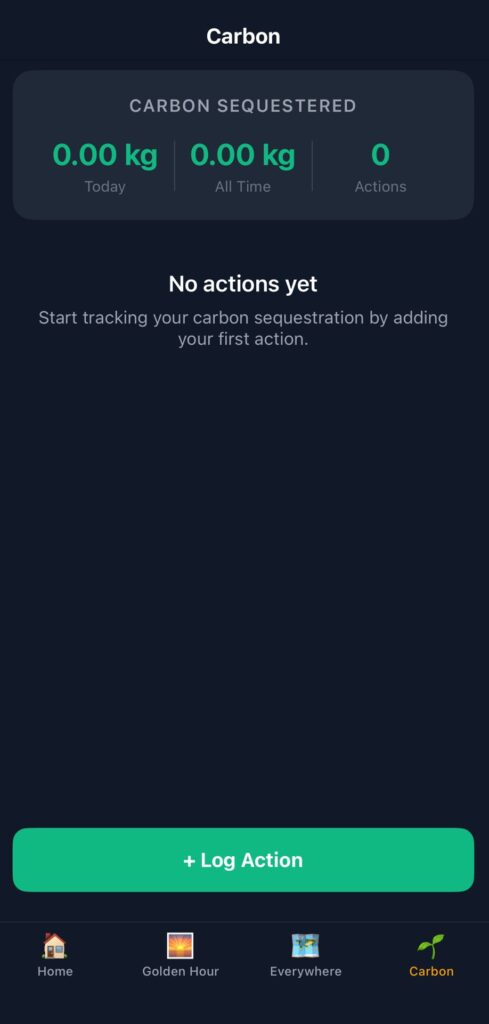
You simply describe what you’ve done in natural language: “planted three oak saplings in the garden,” “started composting kitchen scraps,” or “bought a second-hand jacket.”
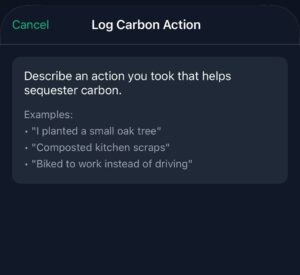
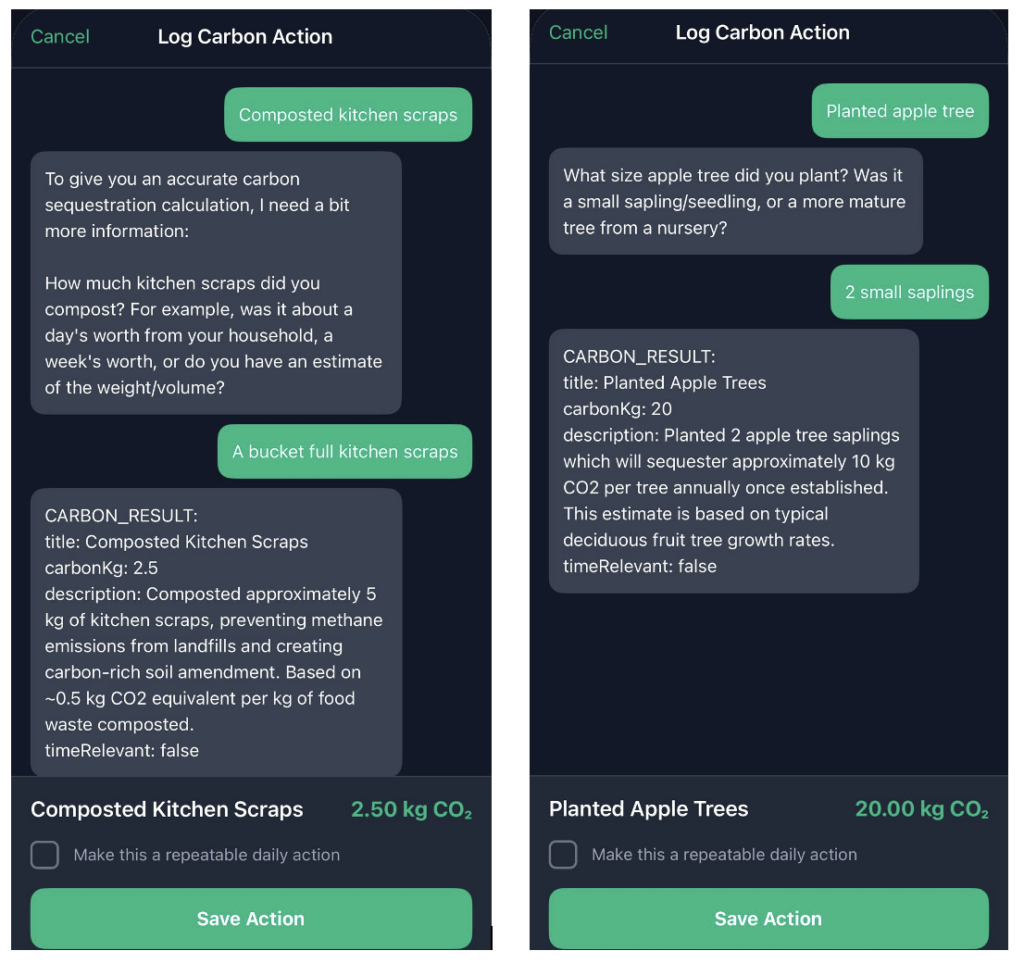
The AI asks clarifying questions when needed. For instance, when logging a used car purchase, it asks about the vehicle type and what alternative you avoided—because buying a used SUV instead of new prevents approximately 6 tonnes of CO2 from manufacturing emissions.
When you log planting trees, it calculates the carbon those trees will sequester over their lifetime. Composting kitchen scraps? The tracker accounts for both the methane prevented from landfill and the carbon stored in the resulting compost when added to soil.
The interface shows your impact in three views: carbon sequestered today, all-time total, and number of actions logged. Each entry displays the CO2 equivalent, making abstract environmental benefits concrete.
What We’ve Learnt
Small, consistent actions create far more impact than occasional dramatic gestures.
Soil regeneration: Composting kitchen scraps not only prevents methane emissions from landfill but creates material that stores carbon in soil. A household composting consistently can sequester 100-200kg of CO2 equivalent annually.
Tree planting: A single mature oak tree sequesters approximately 20kg of CO2 per year. Plant three trees, and over 30 years, you’re looking at nearly 2 tonnes of carbon drawn from the atmosphere.
Transport choices: Cycling short trips prevents more carbon than we’d assumed. Those quick car journeys to the shops accumulate significantly over months.
Purchasing decisions: A used SUV instead of new? That’s 6,000kg of CO2 avoided from manufacturing alone—though this prevents emissions rather than sequestering carbon.
Supporting regenerative agriculture: Choosing food from farms practising regenerative agriculture supports soil health that actively draws carbon into the ground. The tracker helps quantify these choices.
Tracking creates awareness that influences future decisions. When you see cumulative impact, you’re more motivated to maintain sustainable habits and explore new ways to actively sequester carbon.
Actions That Draw Carbon Down
The most powerful actions don’t just prevent emissions—they actively remove carbon from the atmosphere:
Composting organic waste: Creates carbon-rich material that improves soil whilst preventing methane emissions from landfill.
Tree and hedgerow planting: Draws CO2 directly from air and stores it in biomass and soil for decades.
Supporting regenerative agriculture: Purchasing from farms using cover cropping, no-till methods, and rotational grazing helps build soil carbon.
Garden rewilding: Allowing areas to return to natural vegetation creates carbon sinks whilst supporting biodiversity.
Peat-free gardening: Avoiding peat protects existing carbon stores in peatlands, some of Earth’s most effective carbon sinks.
These actions, highlighted by movements like “Kiss the Ground” and research from “Drawdown,” demonstrate how regenerating ecosystems addresses the climate crisis from the ground up.
Why Measurement Matters
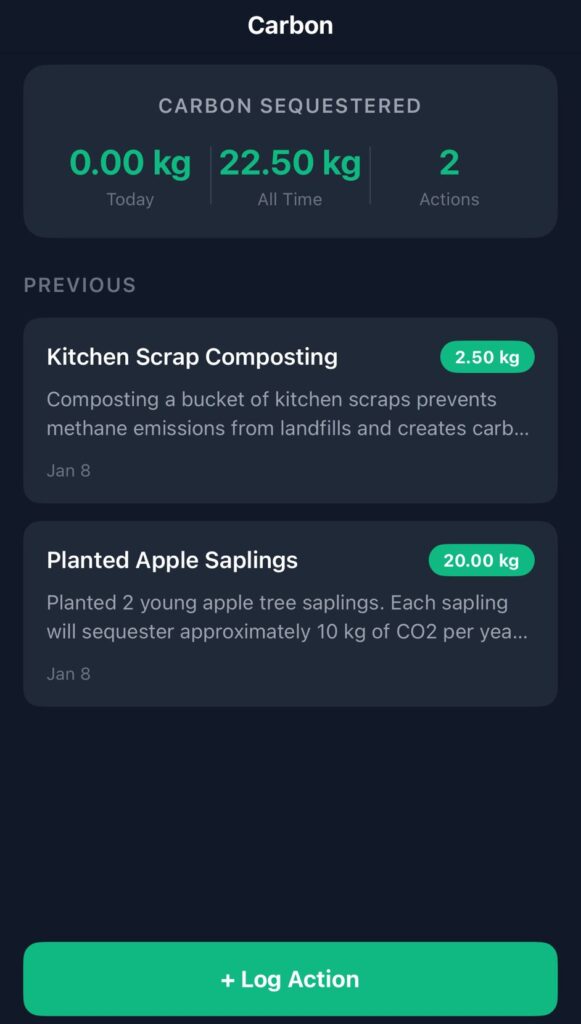
“Being more sustainable” feels overwhelming and vague. “I’ve prevented 50kg of CO2 emissions this month and sequestered 15kg through composting and tree planting” feels achievable and real.
When you see your impact over weeks and months, the case for personal environmental responsibility becomes self-evident. The distinction between preventing emissions and actively drawing carbon down becomes clearer, helping prioritise actions with greatest impact.
Looking Forward
As we continue developing the tracker, we’re exploring opportunities to connect users with regenerative agriculture projects and direct drawdown initiatives. The potential for businesses to support carbon sequestration through partnerships with regenerative farms and reforestation projects represents an exciting frontier.
Understanding what draws carbon into the ground—and measuring our contribution to that process—transforms environmental action from abstract concern into tangible impact.
Getting Started
The tracker is available in The Kitchen Sink: Download from the App Store
Start by tracking actions that actively sequester carbon—composting, tree planting, or supporting regenerative agriculture. Add transport and purchasing decisions that prevent emissions. Watch how the numbers accumulate.
You might be surprised by how much impact your daily choices actually create, and which actions draw the most carbon from the atmosphere into the earth.
Environmental action doesn’t require dramatic lifestyle overhauls. It requires awareness of the choices we’re already making, understanding the difference between preventing emissions and sequestering carbon, and measuring the impact of both.
Want to learn more about how The Kitchen Sink was built?
Read about our AI-assisted development journey: Creating an iOS App with AI: Kitchen Sink’s Journey from Concept to App Store
